Skip to content

Rules, not pledges

Sailing a Protected Park

Most of what protects Komodo is not an operator promise. It is enforced by rangers, written into vessel certification, and capped by the park itself — and that is a far better guarantee than anything we could pledge.

The Komodo National Park entrance sign at Loh Buaya, Rinca Island

In short

Komodo National Park has been protected since 1980 and UNESCO-inscribed since 1991, and the things that actually protect it are enforced rather than promised: mandatory ranger escort in dragon habitat, a pollution prevention certificate every legal vessel must hold, and an annual cap on visitor numbers.

  • 1,733 km² across 29 islands, holding over 1,000 fish species and more than 260 reef-building corals.
  • Ranger escort is mandatory and works at roughly one ranger to five visitors.
  • Waste comes back to Labuan Bajo. Discharge at sea is a certification matter, not a policy choice.
  • An annual visitor cap now limits entry — the single most effective conservation measure here.
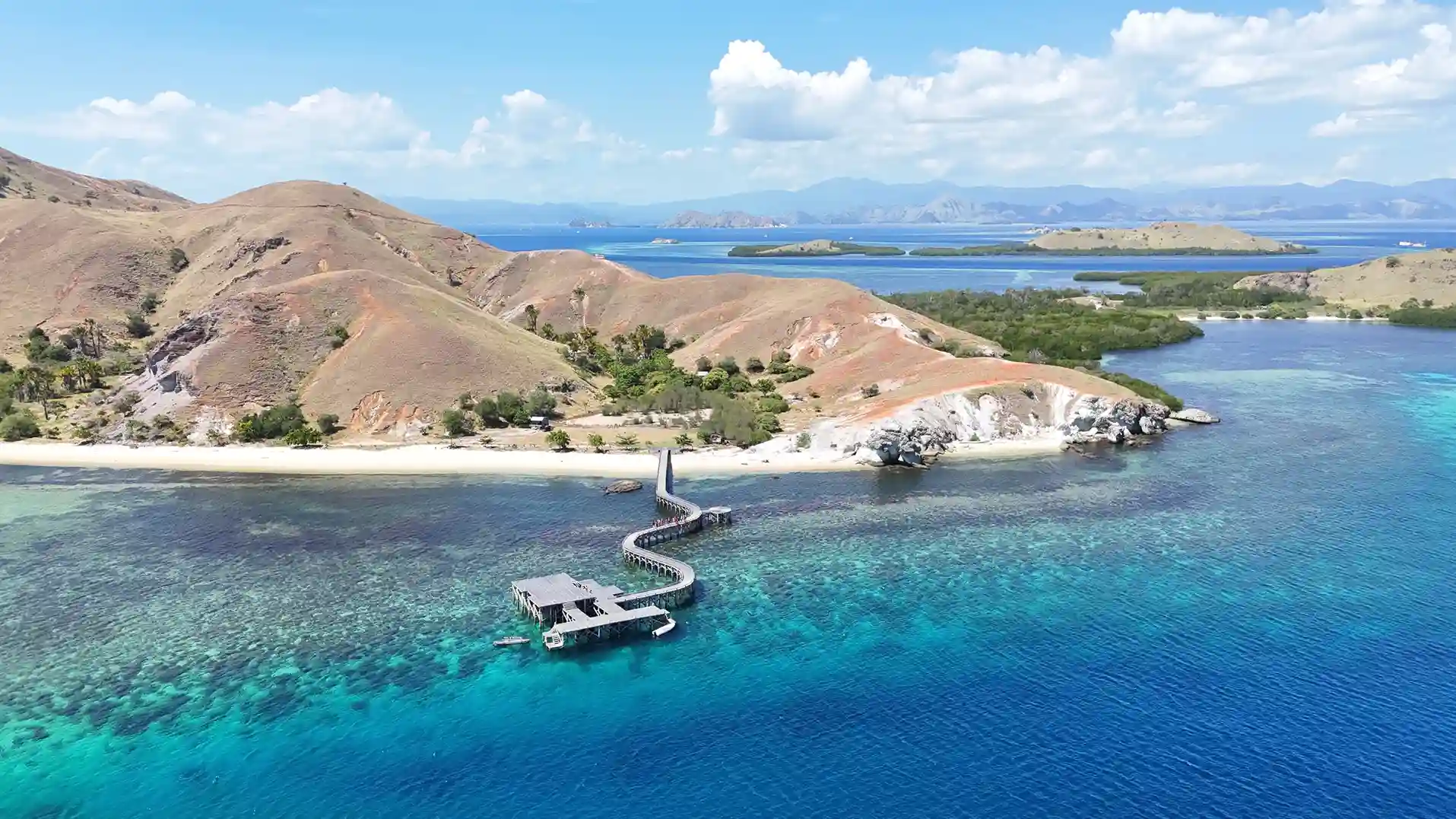
Aerial view of Sebayur Island with a boat moored offshore

Enforced, not promised

Six rules that bind every boat here

None of these is ours to waive on request, and any operator offering to is telling you something about themselves.

A ranger walks with you

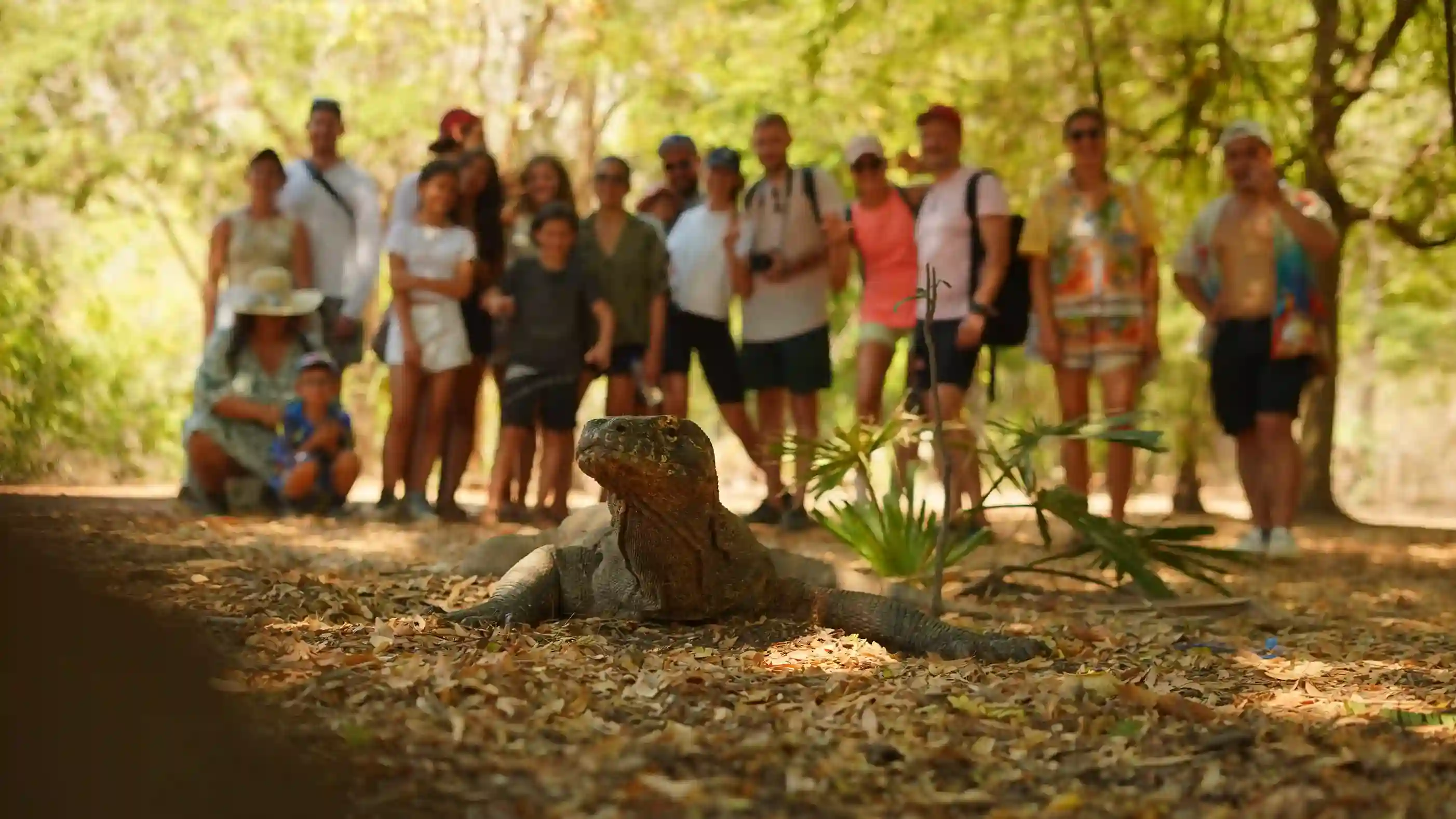
You cannot walk any trail on Rinca or Komodo Island alone. Every trek is escorted, at a working ratio of about one ranger to five visitors, and larger parties are split. The ranger sets the pace, the route and the stopping distance.

Three to five metres

The standard visitor distance from a dragon, and rangers hold the line in practice. You also never run — running reads as prey movement, and a Komodo dragon sprints far faster than you over a short distance.

No feeding, no touching

Feeding wildlife is forbidden inside the park. So is provoking an animal for a photograph. Groups that spread out for pictures are the groups that get corrected, and rightly.

Where you may anchor

Mooring buoys are used where they exist, and anchoring is restricted to sand rather than dropped onto coral. A single badly placed anchor does damage that outlasts everyone aboard the boat that dropped it.

Waste goes back to town

The pollution prevention certificate a legal vessel must hold governs waste and discharge. Rubbish generated across two or three days comes ashore in Labuan Bajo — this is a certification requirement, which is why it is worth more than a promise.

A cap on how many come

Park entry now runs under an annual visitor ceiling with named registration. It is the one measure that addresses the actual pressure on the park, and it is why August dates now sell out before August starts.

On your trip

Where this shows up in practice

Four moments across a normal three-day sailing. None of them requires anything heroic of you.

  1. The briefing before you sail

    Alongside the safety briefing: what the ranger will ask of you ashore, where waste goes, and why the water dispenser exists. Two minutes, and it removes almost every awkward moment later in the trip.

  2. Refills, not bottles

    Drinking water aboard comes from a dispenser, so a refillable bottle in your bag removes a stack of single-use plastic from a national park across three days. Bring one; it is on the packing list for exactly this reason.

  3. Sunscreen, before you swim

    Reef-safe sun protection matters here more than in most places, because you will be swimming directly over living coral at Pink Beach, Taka Makassar and Manta Point within hours of boarding. Buy it before you travel — choice in Labuan Bajo is limited.

  4. The morning walk

    Ashore early, in file, behind the ranger. Dragons are ectotherms and are exposed and slow from about six to ten in the morning; open savanna ground has been recorded above 50°C on hot days, after which the animals move into shade. Going early is better wildlife practice and a better trip.

Declare an open wound or a period to your ranger before you set off. Rangers ask routinely — it is long-standing practice around a scent-driven predator, and it costs nothing to mention quietly.

What we are not claiming

An earlier version of this page claimed a zero-discharge policy, the complete elimination of single-use plastic, complimentary reef-safe sunscreen for every guest, that over 85% of crew are hired from West Manggarai villages, that over 90% of onboard waste is sorted, wages significantly above the regional minimum, BPJS enrolment for all staff, and a community fund financing education in Papagarang and Rinca.

It also named a carbon-offset partnership with the Rimba Raya Biodiversity Reserve in Kalimantan. That is a real, registered conservation project — and naming somebody else's organisation as your partner is not a claim to make loosely.

We could not evidence any of it, so none of it is on this page. An audited percentage is a serious statement; an unaudited one that sounds like an audited one is the standard shape of greenwashing, and this destination has too much at stake for that.

Where the operator can produce evidence — enrolment records, an offset certificate, a measured local-hire share — we will publish the figure with its source, the way every commercial figure on this site already is. Until then the page says less and means it.

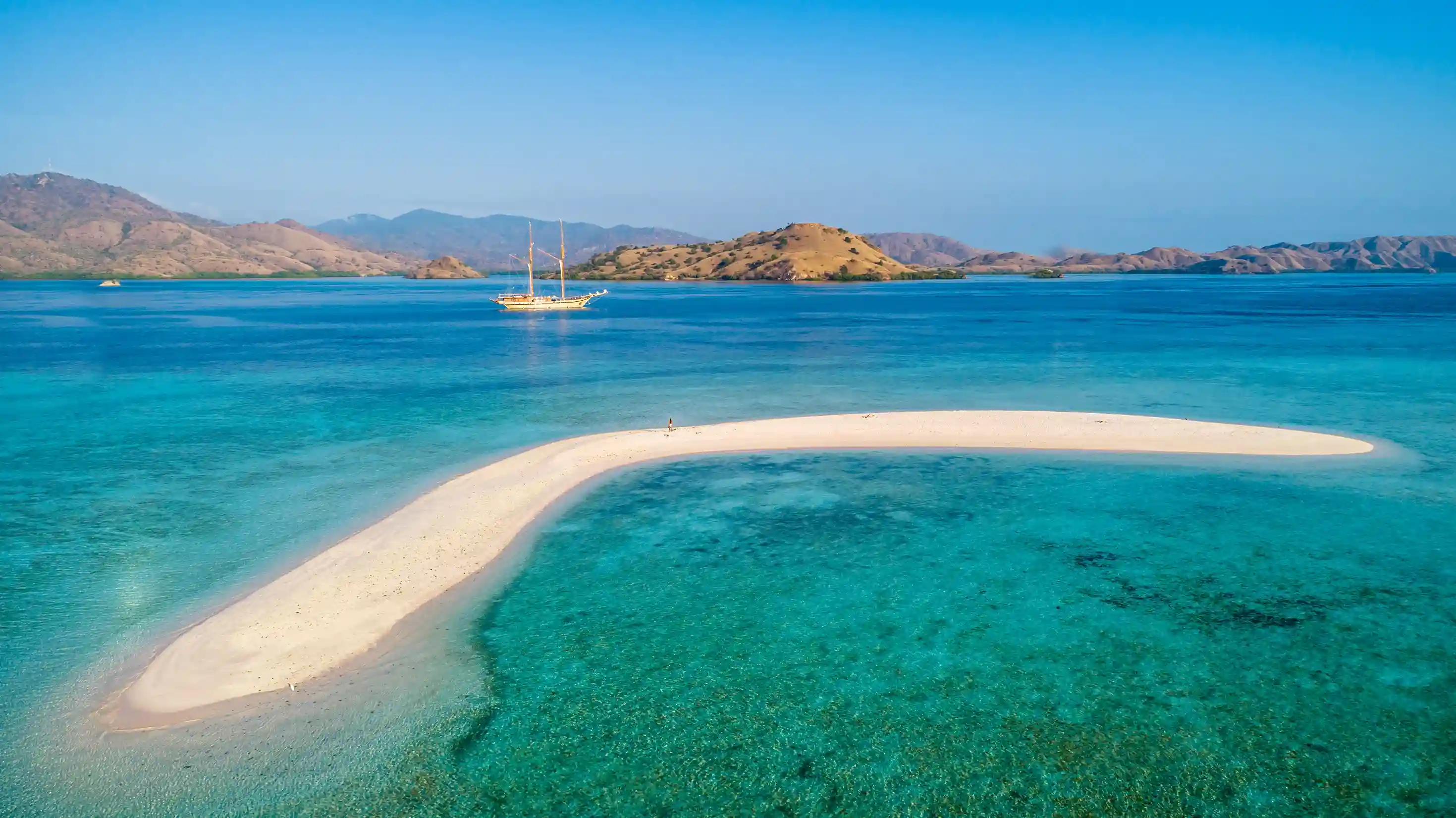
The white sandbar of Taka Makassar in turquoise shallows

The three that are actually yours

Guests overestimate how much of this is the operator's and underestimate how much is theirs.

What you put in the water

Conventional sunscreen washes off onto coral within minutes. Reef-safe formulations are the single highest-impact thing an individual guest controls here, and they cost the same as the alternative.

What you bring aboard

Every disposable item you pack becomes waste that has to be carried back to Flores. A refillable bottle, a solid bar of soap and travel-size refills rather than miniatures do more than any pledge on this page.

How close you get

The photograph is not worth the step forward. Stay behind the ranger, hold the distance, and accept that a dragon in shade at eleven in the morning is not going to be moved for you — by anyone, at any price.

Book early in the day rather than late for the dragon walk, and you get the better sighting and the lower-stress animal at the same time. The interests line up more often than people expect.

Frequently Asked Questions

Do you offset the carbon of my trip?
No, and an earlier version of this page said otherwise. We are not going to claim an offset programme we cannot show you a certificate for. If you want to offset your own flights, do it directly with a registered project rather than through us.
What happens to waste on board?
It comes back to Labuan Bajo. Waste and discharge are governed by the pollution prevention certificate that a legally operating vessel must hold, which makes it a certification requirement rather than an operator promise — and that is a stronger guarantee than anything we could write here.
Is it responsible to visit at all?
Park entry now runs under an annual visitor cap with named registration, which is the park authority deciding how many people it can carry. Visiting inside that cap, with a ranger, on a certified vessel, is the arrangement the park has designed. The pressure it is managing is real, and so is the revenue.
How close can I get to a dragon?
Three to five metres is the standard visitor distance and the ranger sets it on the day. Never run, never feed, never provoke, and stay behind the ranger with your group. These are enforced, not advisory.
Are the crew local?
Crews are drawn substantially from Flores and Labuan Bajo, which is the norm in this industry. We are not publishing a percentage, because the previous version of this page published one — "over 85%" — that we could not evidence. Ask us about a specific vessel and we will tell you what we actually know about it.
Can I use a drone in the park?
Only with a permit, which is a separate park ticket that must be requested at least seven days before the trip. It cannot be arranged on the morning of departure, and flying without one inside a protected area is not a small matter.

Ask what the rules mean for your trip

Whether a mobility issue changes the ranger walk, whether your route uses mooring buoys, what a drone permit takes. Practical questions get practical answers, and none of them is a strange thing to ask.