Skip to content

The boat is the hotel

Komodo Liveaboard Yacht Trips

Two to four nights aboard, waking up already anchored at the next island. No daily crossings, no hotel check-ins, and the park to yourself at the hours the day boats cannot reach.
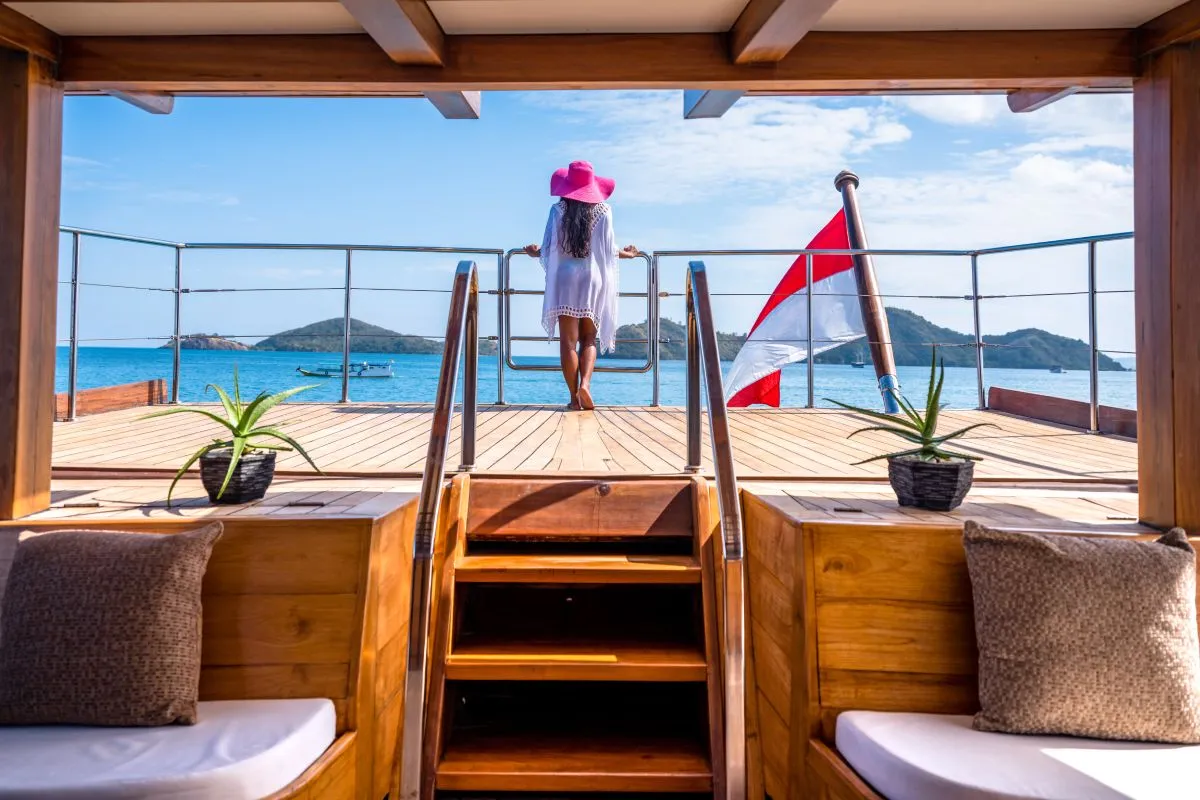
A guest on the deck of a phinisi yacht looking out over the park

In short

A Komodo liveaboard is a multi-night trip where the yacht is your accommodation — you sleep aboard between two and four nights while it moves you between anchorages, instead of returning to Labuan Bajo each evening.

  • Book a cabin from USD 300 per person, or the whole vessel from USD 1,550 per night.
  • Sunrise on Padar and dusk at Kalong both need you to already be in the park.
  • Meals, snorkelling gear, guides and tender transfers are aboard and included.
  • April to November is the dry season; July to September usually gives the clearest water.
The sun deck of a phinisi yacht at anchor in Komodo National Park

Life aboard

What a day on a liveaboard actually looks like

Not a cruise schedule. Two to four things happen, and the rest of the day is deck, water and food.

Early, by choice

The good hours here are early. Padar before six, Manta Point mid-morning when the light is best. You will be woken for both, and you will forgive it.

Three meals aboard

Cooked in the galley, served on the aft deck or in the salon. Dietary requirements are handled if you say so at booking rather than at the jetty.

Water between stops

Snorkelling gear stays out. Tenders run you to beaches. Paddleboards on most vessels, and nobody minds if you spend an afternoon doing nothing.

Fresh water, rationed politely

Tanks and, on larger vessels, a desalinator. There is enough for a daily shower; there is not enough to leave the tap running. The crew will say so kindly.

Starlink on most boats

Fitted across seven of the nine owned vessels. It is satellite — it slows under load and drops in a squall — but the park is no longer a dead zone.

Nights at anchor

In a protected bay, engines off. This is the part guests describe months later, and the part no day tour can sell you.

Phinisi or modern motor yacht?

A phinisi is the traditional two-masted Indonesian sailing ship — timber cabins, wide open decks, and the silhouette you came here to photograph. It is the better boat for deck life and for evenings under the stars, and it is what most of the fleet is.

A modern motor yacht trades that character for larger suites, stronger air-conditioning, quieter engines and stabilisers that help in a chop. If someone in your group is a poor sailor, or you want hotel-standard cabins, it is the honest recommendation.

Safety equipment is not a differentiator between them: life rafts, jackets for everyone aboard, radio and first aid are standard on both, on every departure.
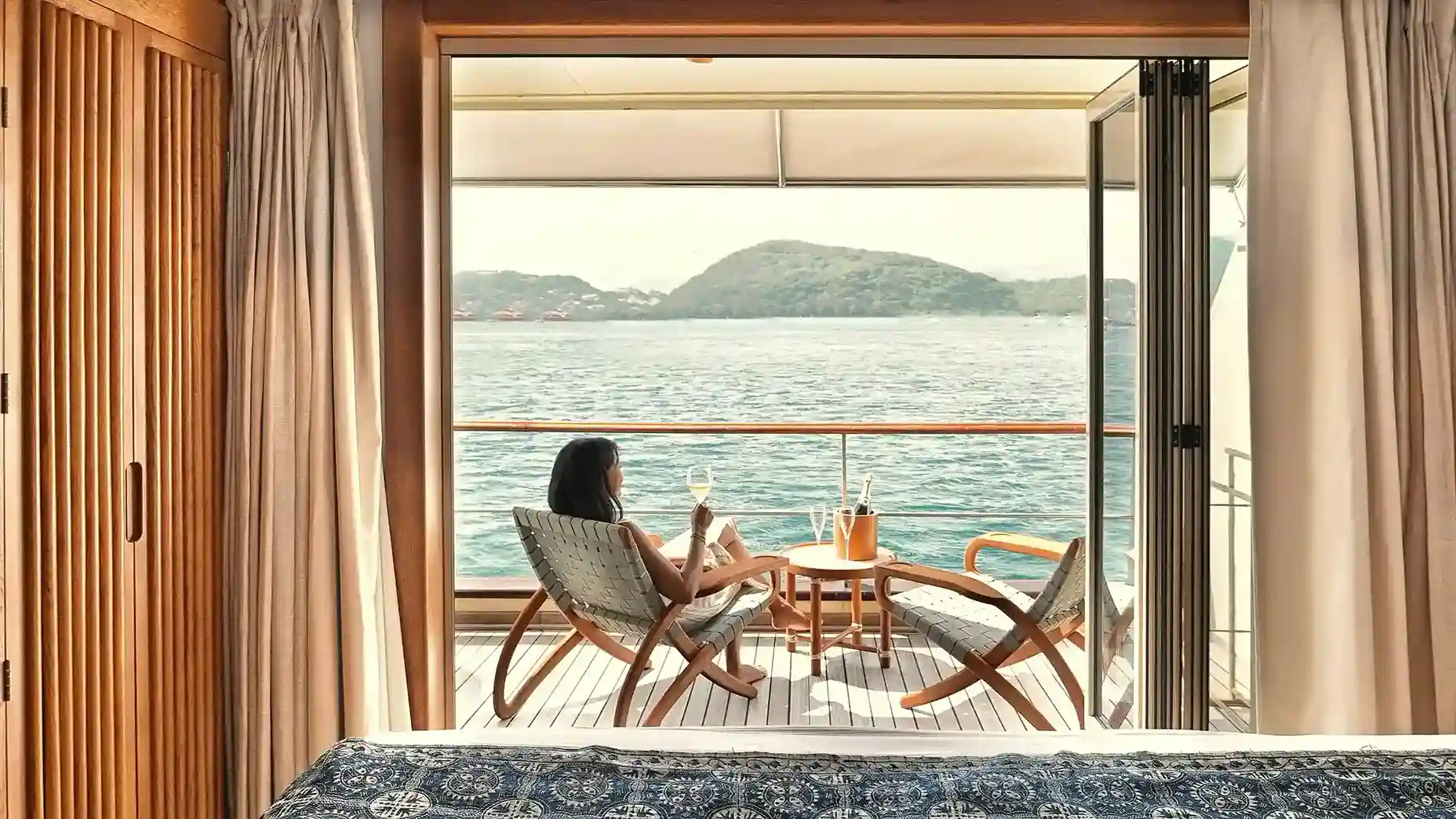
A private cabin aboard a Komodo liveaboard, opening onto a balcony over the water

A cabin, or the whole boat?

You buy

Share cabin
One cabin on a scheduled sailing
Private charter
The entire vessel and crew

From

Share cabin
USD 300 per person
Private charter
USD 1,550 per yacht, per night

Aboard

Share cabin
8–12 travellers
Private charter
Only your group

Dates

Share cabin
Fixed weekly departures
Private charter
Any date the vessel is free

Route

Share cabin
Fixed 3D2N circuit
Private charter
Agreed with the captain

Break-even

Share cabin
Cheaper below about six people
Private charter
Often cheaper above it

This compares our own two formats. We will do the per-head arithmetic for your group honestly, including when it points at the cabin.

Before you board

Three things worth doing first

Small decisions that change the trip more than the vessel does.

  1. Arrive a day early

    Fly into Komodo Airport the day before. Indonesian domestic flights slip often enough that landing on departure morning is a genuine risk, and the boat cannot wait.

  2. Buy the seasickness tablets in town

    Take them before you feel anything, not after. Even in the dry season there are crossings with a swell, and there is no pharmacy at anchor.

  3. Say who is sleeping where

    Cabin position matters more than cabin class: lower deck is cooler and steadier, upper deck is brighter and airier. Tell us which you would rather have.

If a guest needs to return to town mid-trip, every multi-night programme has a route back — the yacht diverts to the nearest ranger post with speedboat access, or meets a support vessel.

Frequently Asked Questions

How many nights should I book?
Two, if you can. One night still gets you Padar at sunrise and the dragons. Three adds the northern sites and enough slack to stop moving. Beyond four you are into diving-focused or fully custom itineraries.
What does a liveaboard include?
Your cabin and linen, three meals a day plus snacks and soft drinks, snorkelling gear, tenders, park-certified guides, and crew. Excluded: the IDR 700,000 park ticket, alcohol, diving at USD 50–80 per dive, travel insurance, flights and gratuities.
Is there fresh water for showers?
Yes, daily. Vessels carry storage tanks and the larger ones run desalinators. The crew will ask you to keep showers short — that is a real constraint on a boat, not a service failure.
Can families with children join?
Yes, and vessel choice matters more than usual. Look for enclosed decks and a cabin layout that keeps a family together. Wildlife walks are always escorted by rangers. Tell us the ages and we will rule out the boats that do not suit.
Is a liveaboard the same as a yacht tour?
Not quite. "Liveaboard" means the yacht is your accommodation for several nights. A "tour" can return to harbour or a hotel each evening. The difference is where you sleep, and it is the difference that decides whether Padar at sunrise is available to you.
When is visibility best underwater?
July to September, generally. The dry season runs April to November and manta encounters are good year-round, since Manta Point is a cleaning station rather than a seasonal event.

Which cabin, which boat?

Tell us your dates, how many of you there are, and whether anyone is a nervous sailor. We will come back with the vessels actually free and say which cabin on which boat we would put you in.