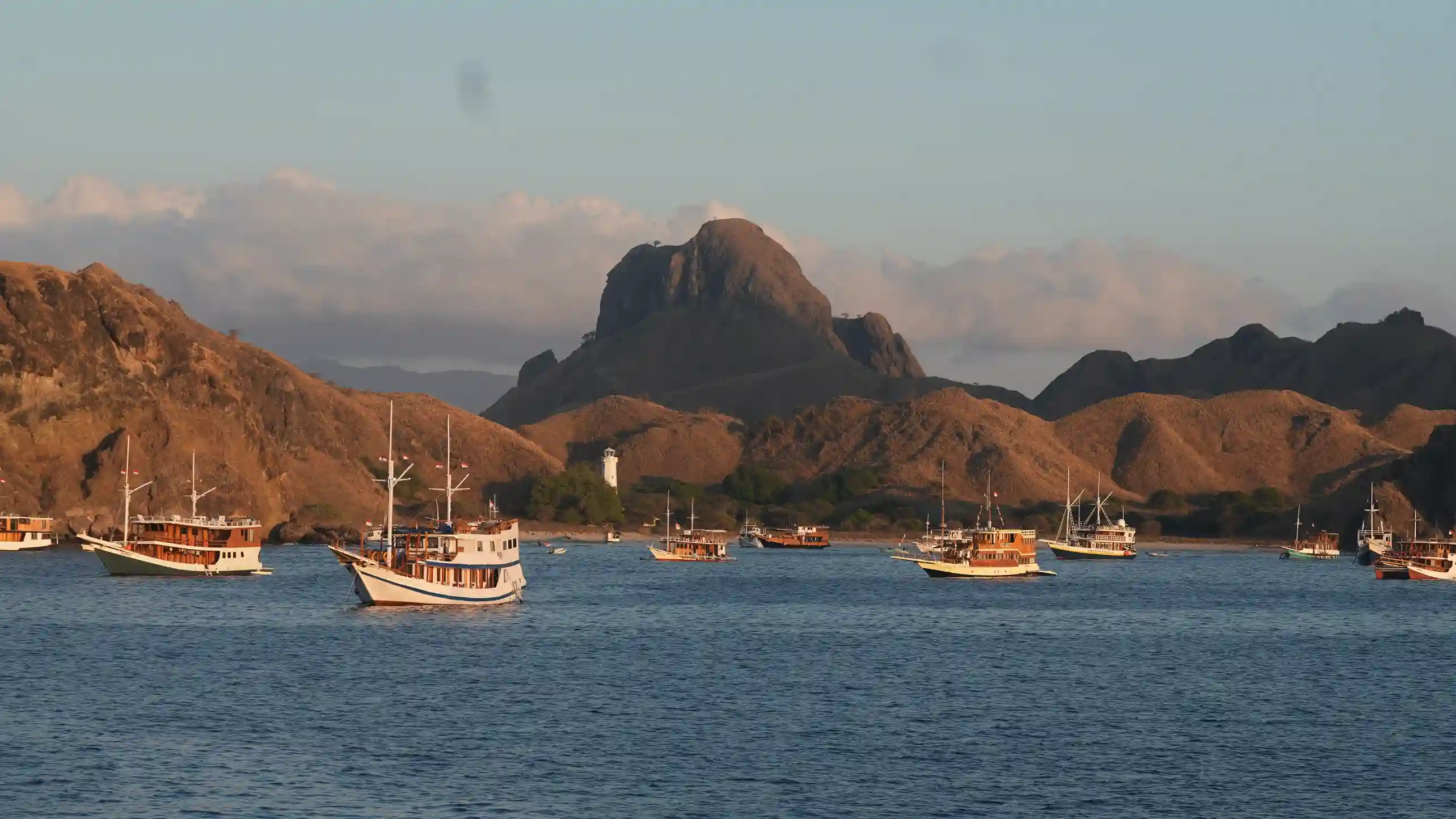
KSOP approval
The harbour authority permit confirming the vessel has passed official safety inspection and is cleared to carry passengers. This is the foundational one — without it nothing else matters.
What to ask, and who to ask
Indonesian law names the papers a passenger phinisi has to hold. You can ask to see each one before you board — and any operator worth sailing with will show you.

A legally operating Komodo phinisi holds KSOP harbour-authority approval, a Laik Laut passenger safety certificate, a Non-Convention tonnage certificate under Ministry of Transport Regulation 65/2009, a pollution prevention certificate, certified safety equipment and passenger insurance — and clears a sailing approval before every departure.

Ask by name
Indonesian maritime regulation is specific about this. If an operator hesitates on any of these, that hesitation is your answer.
An SPB — Surat Persetujuan Berlayar, a sailing approval — is issued by the harbour master before a vessel may leave. The captain confirms the boat's condition and that safety measures are in place, and if anything is wrong the departure does not happen. It is a per-trip clearance, not an annual one.
That is the mechanism behind the sentence guests sometimes find frustrating: a departure can be delayed on weather. Captains work from BMKG forecasts and the harbour master's guidance alongside their own reading of the water, and in Komodo the currents through the channels are strong enough that judgment is the actual safety equipment.
A captain who prioritises your schedule over the conditions is not doing you a favour. If a day gets rearranged around a tide or a wind, that is the system working rather than failing.
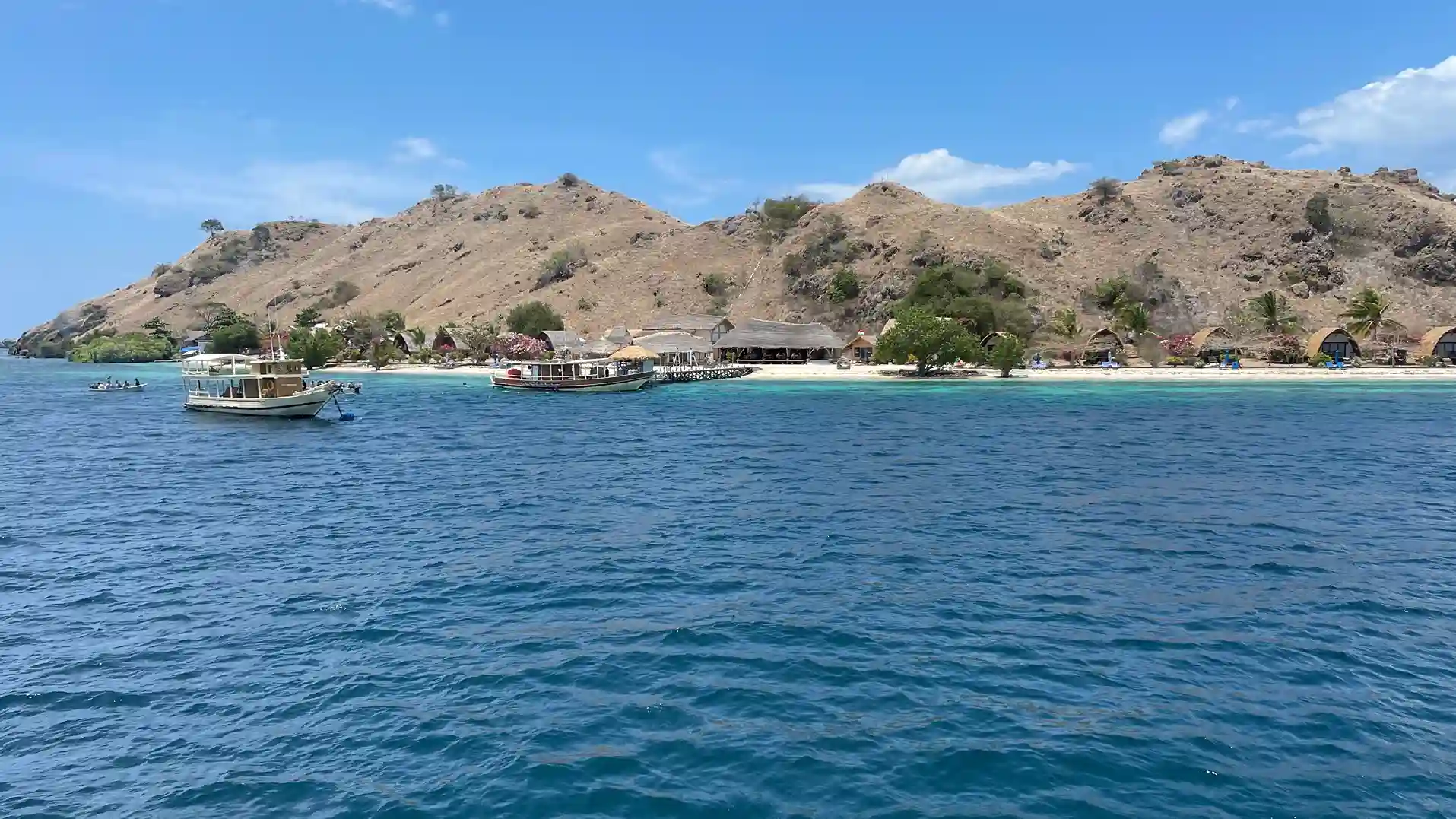
Our part
Nine of the vessels we sail are our own. The rest are chartered from vetted partners, and the difference should be invisible to you — which only works if the checks are identical.
KSOP approval, Laik Laut, tonnage and pollution certificates, and current safety-equipment certification are confirmed before a partner vessel goes on our list at all. A beautiful boat with lapsed paperwork is not a boat we sell.
Life jackets against passenger numbers, raft capacity, extinguishers, buoys, and the navigation and communication fit — GPS chartplotter, radar, VHF, and satellite or long-range comms for the stretches with no mobile signal. AIS so other traffic can see you.
Master and engineer certification for the vessel class, and crew trained in the emergency procedures the regulation requires. On dive-capable vessels, current dive-professional certification and working oxygen.
Before you sail: where the jackets are, where the muster point is, how the tender boarding works and who to tell if you feel unwell. If nobody gives you this briefing on any boat anywhere, that is worth noticing.
Some operators additionally hold international certification such as RINA or ISO. It is a genuine extra, not a legal minimum — treat it as a bonus rather than a baseline.
Three things no operator can do for you, and all three matter more than people expect.
Take a policy that covers medical evacuation, not only cancellation. Labuan Bajo is the nearest town with a hospital and you may be hours from it by sea. If you are diving, check the policy covers diving specifically — many exclude it by default.
Heart conditions, pregnancy, reduced mobility, recent surgery, severe allergies, a child who cannot swim. None of these are automatically a problem. All of them change how a captain plans a day, and finding out at the swim platform is the wrong moment.
Rangers are mandatory in dragon habitat, they set the distance — keep at least five metres — and you do not feed, provoke or get between a dragon and its route. Tell your ranger before the walk if you have an open wound or are menstruating: dragons track blood, and rangers manage it routinely.
On the water, the same principle: the crew will say honestly who should sit out a drift snorkel at Manta Point. It is not a judgement on your swimming, it is a judgement on the current.
Name the vessel, or tell us your dates and we will name it. We will send the certification for that specific boat, say plainly whether it is ours or a partner's, and answer any medical or mobility question before you commit.
+62 811-3823-875
sales@komodoluxury.com