Skip to content

Soft bag, short list

What to Pack

Cabins are small, the laundry is the sea, and there is no shop between Labuan Bajo and the last morning. Here is what actually earns its space — and the five things guests wish they had brought.

The sun deck of a phinisi yacht at anchor in Komodo National Park

In short

Pack light, soft-sided and quick-drying: two or three changes of breathable clothing, closed shoes with grip for the ranger treks, reef-safe sun protection, a dry bag, a head torch for the Padar climb, and any medication you take, in its original packaging.
  • Soft bag, not a hard case — cabin storage is a locker, not a wardrobe.
  • Temperatures sit between 22°C and 31°C all year; humidity is high in every month.
  • Masks, fins, towels and life jackets are aboard. Bring your own only if fit matters to you.
  • Bring rupiah in cash. There is no card machine at a ranger station or a beach warung.
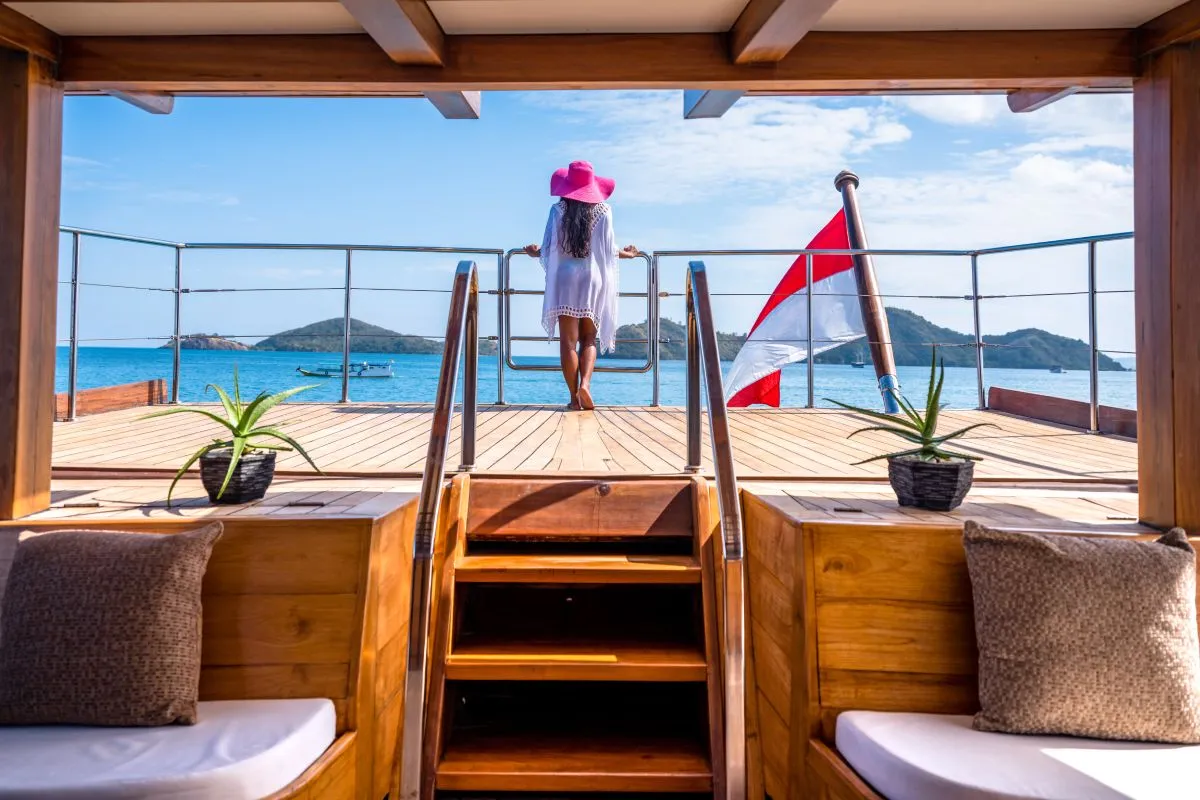
A guest on the deck of a phinisi yacht looking out over the park

The list

Six categories, and what each one really needs

Requirements rather than brands. Most people already own everything here.

Clothing

Light, breathable, quick-drying — cotton and linen over synthetics. Two or three changes is genuinely enough for three days. Long sleeves and light trousers for the treks: they beat sunscreen for the two hours you are in open savanna.

Footwear

One pair of closed shoes or trekking sandals with real grip for Rinca and Padar, and one pair of flip-flops for everything else. No heels — teak decks are slippery, and the crew will ask you to take them off anyway.

Sun

Reef-safe sunscreen at a high factor, a wide-brimmed hat, sunglasses and lip balm. Reef-safe is not a preference here; you will be swimming directly over coral at Pink Beach and Taka Makassar within hours of boarding.

In the water

Swimwear you can wear three days running, a rash guard for long snorkels, and a quick-dry towel. Masks, snorkels and fins are provided. Bring your own if you have a face the standard mask does not seal on — that is a real problem to solve on land.

Electronics

A dry bag, a power bank, and a universal adapter — Indonesia runs 230V on round two-pin sockets. Charging aboard is real but shared, and a bank means you are not queueing for a socket before the Padar climb.

Health

Prescriptions in their original packaging, motion-sickness tablets if you are prone, plasters, antiseptic and an insect repellent. The boat carries a first-aid kit; it does not carry your specific medication, and the nearest pharmacy is Labuan Bajo.

Five things guests wish they had brought

None of these are exotic. They are simply the ones nobody thinks about until the moment they are needed.

A head torch

The Padar climb starts before five, in the dark, on stairs. A phone torch works and occupies the hand you want on the rail. This is the single most-regretted omission on the list.

Motion-sickness tablets

Taken before you sail, not after you feel it — most of them need an hour to work. Crossings between islands are short, but the first night at anchor in a breeze surprises people.

Rupiah, in cash

For gratuities, a beach warung, or anything bought on Rinca. Gratuities are not compulsory; where guests do tip, 10–15% is the usual guide. There is no card machine anywhere in the park.

A drone permit, not just the drone

Flying inside the park needs a separate park ticket, requested at least seven days before the trip. It cannot be arranged on the morning of departure, and a drone without one stays in the bag.

One warm layer

Nobody packs for cold in Komodo, and then sits on deck at ten at night in a sea breeze with wet hair. A thin fleece or a light windbreaker is the most-used item on most trips after the swimwear.

Cabins are air-conditioned, which is the other reason a layer earns its space.

What to leave at home

The hard suitcase. Storage in a phinisi cabin is a locker and the space under a bunk; a rigid case fits neither, and the crew will end up stowing it somewhere you cannot reach it. A soft duffel collapses and disappears.

Heels, and anything you would be upset to get salt on. Decks are teak and frequently wet, tenders are boarded from a swim platform, and everything you bring will spend three days in sea air whether you swim in it or not.

Single-use plastic, as far as you can manage it. Water is refilled aboard from a dispenser rather than handed out in bottles, and the park is one of the places where that genuinely matters. Bring a refillable bottle and the problem solves itself.

And formal wear. Dinner is on deck, the dress code is dry clothes, and no vessel in this fleet has ever asked for more than that.
A private cabin aboard a Komodo liveaboard, opening onto a balcony over the water

Three that depend on your trip

The list above is the same for everyone. These three are not.

If you are diving

Bring your certification card and your dive computer. Tanks, weights and a guide come with the dive at USD 50–80; a computer you trust does not. Log your last dive before you travel, and leave the final morning of the trip free so there is a surface interval before your flight.

If you have children

A rash guard beats sunscreen for a child who is in and out of the water all day, plus their own small dry bag so they are responsible for something. Life jackets are aboard in adult sizes as standard — tell us their ages at booking so child sizes are put on before you sail.

If you sail Dec–Mar

A light rain shell and a second dry bag. Green-season rain arrives as a short heavy shower, usually in the afternoon, and passes. What ruins the day is a wet camera, not a wet person.

For village visits and around Labuan Bajo, cover shoulders and knees. It costs you a sarong in the bag and it is simply how you would want to be treated.

Frequently Asked Questions

Do I need to bring snorkelling gear?
No. Masks, snorkels and fins are aboard, along with life jackets. Bring your own mask only if you already know that standard sizes do not seal on your face — that is a much better problem to discover at home than on a reef.
How much luggage can I bring?
Less than you think. A soft duffel or backpack per person is right for a two-to-four-night trip. If you are flying in from Bali, check your domestic baggage allowance separately — it is usually tighter than your international one.
What should I wear on the dragon trek?
Closed shoes with grip, light long trousers or leggings, and a long-sleeved top. It is open savanna in full sun for one to two hours. Tell your ranger before you set off if you have an open wound or are menstruating — dragons track blood, and the rangers manage that routinely.
Is there laundry aboard?
No. Pack quick-drying fabrics and plan to rinse things in fresh water and hang them on deck, which is what everyone ends up doing by day two.
Do I need cash?
Yes, in rupiah. Gratuities, anything bought ashore and any incidental at a ranger station are cash. There is no ATM inside the park, so draw what you need in Labuan Bajo before boarding.
Can I bring a drone?
Yes, with a permit. Flying inside Komodo National Park requires a separate park ticket that has to be requested at least seven days before departure. Tell us at booking and we will arrange it; asked for on the day, it cannot be done.

Tell us what you are unsure about

Diving gear, a medical condition, a child's life jacket, a drone, a dietary requirement. All of it is easier to solve at booking than at the jetty, and none of it is a strange question.