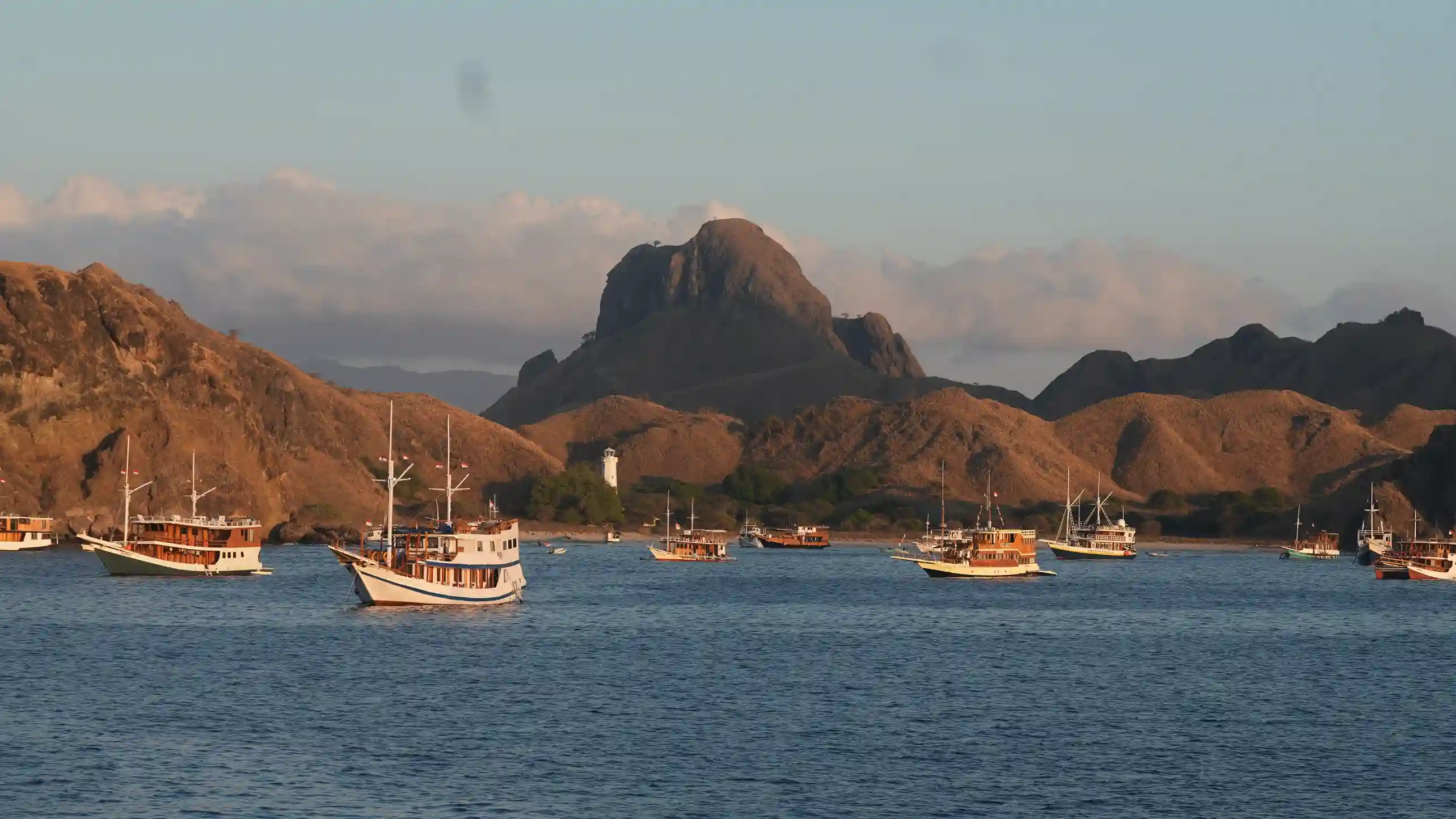
Entry point
Mid-range phinisi
$250,000–600,000
20–30 m · builds in 12–24 months
Charters in the USD 800–1,500 a night band. The entry point into the market and the shortest route to a first season.
For owners, not passengers
What a charter vessel costs to buy, what class it puts you in, and why nobody serious will quote you a guaranteed return.

A charter-ready yacht in Indonesia runs from about USD 250,000 for a mid-range 20–30 metre phinisi to USD 7 million and beyond for a 40 metre flagship, with professionally managed vessels showing illustrative net yields of 6 to 14% a year — never guaranteed.

Capital entry
Market ranges published by the operator's investment desk. Capital entry, the nightly charter band that class commands in Komodo, and how long it takes to build one.
Entry point
$250,000–600,000
20–30 m · builds in 12–24 months
Charters in the USD 800–1,500 a night band. The entry point into the market and the shortest route to a first season.
$700,000–4,000,000
30–40 m · builds in 18–30 months
Charters at USD 2,000–5,000+ a night. Where the Ayvara and Malca class sits, and where utilisation tends to be steadiest.
$1,800,000–7,000,000+
40 m+ · builds in 24–36+ months
Charters at USD 15,000–27,000 a night. Fewer weeks sold, at a far higher rate, with a correspondingly longer runway.
Capital entry is a market range, not a quotation, and the nightly band is what the class earns rather than what any individual vessel achieves. Utilisation is the variable that decides whether either number matters.
This is the operator's stated position, and it is the reason to read further rather than a reason not to.
A promised percentage on a charter yacht is a promise about somebody else's balance sheet. If the operator underwriting it fails, the guarantee fails with it — which is precisely when you would want it.
Vessel class, realised utilisation, and operating discipline. Nothing published in advance can fix any of the three, so a headline percentage is a marketing number rather than a forecast.
A bespoke written model for the specific vessel: revenue share, cost base, and a downside case. Illustrative net yields for professionally managed vessels run 6 to 14% a year, stated as illustrative and not as a promise.
If another operator offers you a guaranteed yield on an Indonesian charter yacht, ask who underwrites it and what happens to the guarantee if that entity stops trading. It is a fair question and the answer is informative.
Utilisation, before anything else. A vessel sells a finite number of nights a year and the dry season from April to November is when most of them are sold. A boat that misses that window does not make it up in January.
Operating discipline second. Fuel, crew, maintenance schedules, dry-docking and the cost of keeping a wooden hull in tropical water are the difference between a gross figure and a net one, and they are where inexperienced ownership loses money.
Distribution third. A vessel in a network with an existing booking desk and a decade of reviews starts from a different place than one listed alone. That is the argument for managed ownership, and it is also the argument you should interrogate hardest.
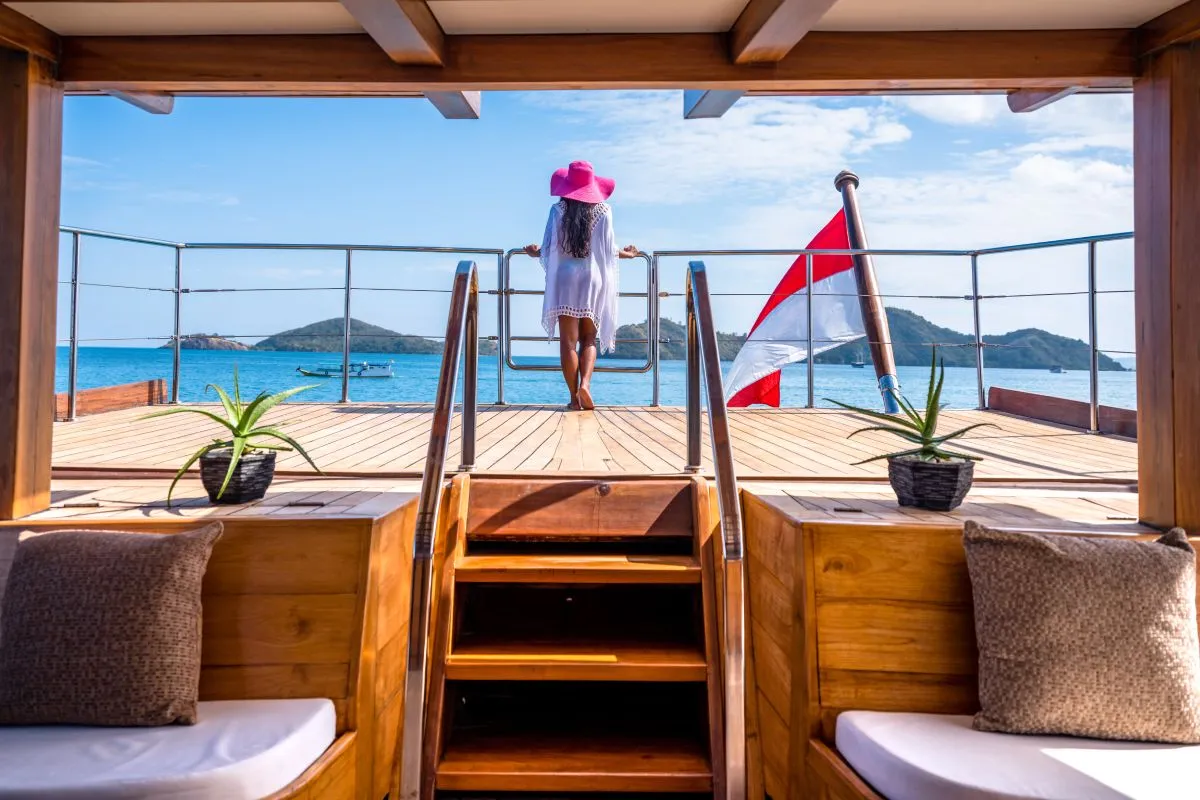
Tell the investment desk the class you are considering and the capital you are working with. What comes back is a bespoke projection for a specific vessel — revenue share, cost base and a downside case — rather than a percentage.
+62 811-3823-875
sales@komodoluxury.com