Skip to content

From 1,063 real bookings

When Everyone Else Sails

The weather answer is easy and everybody publishes it. The harder question is when the boats actually go — and the booking ledger answers that one properly.

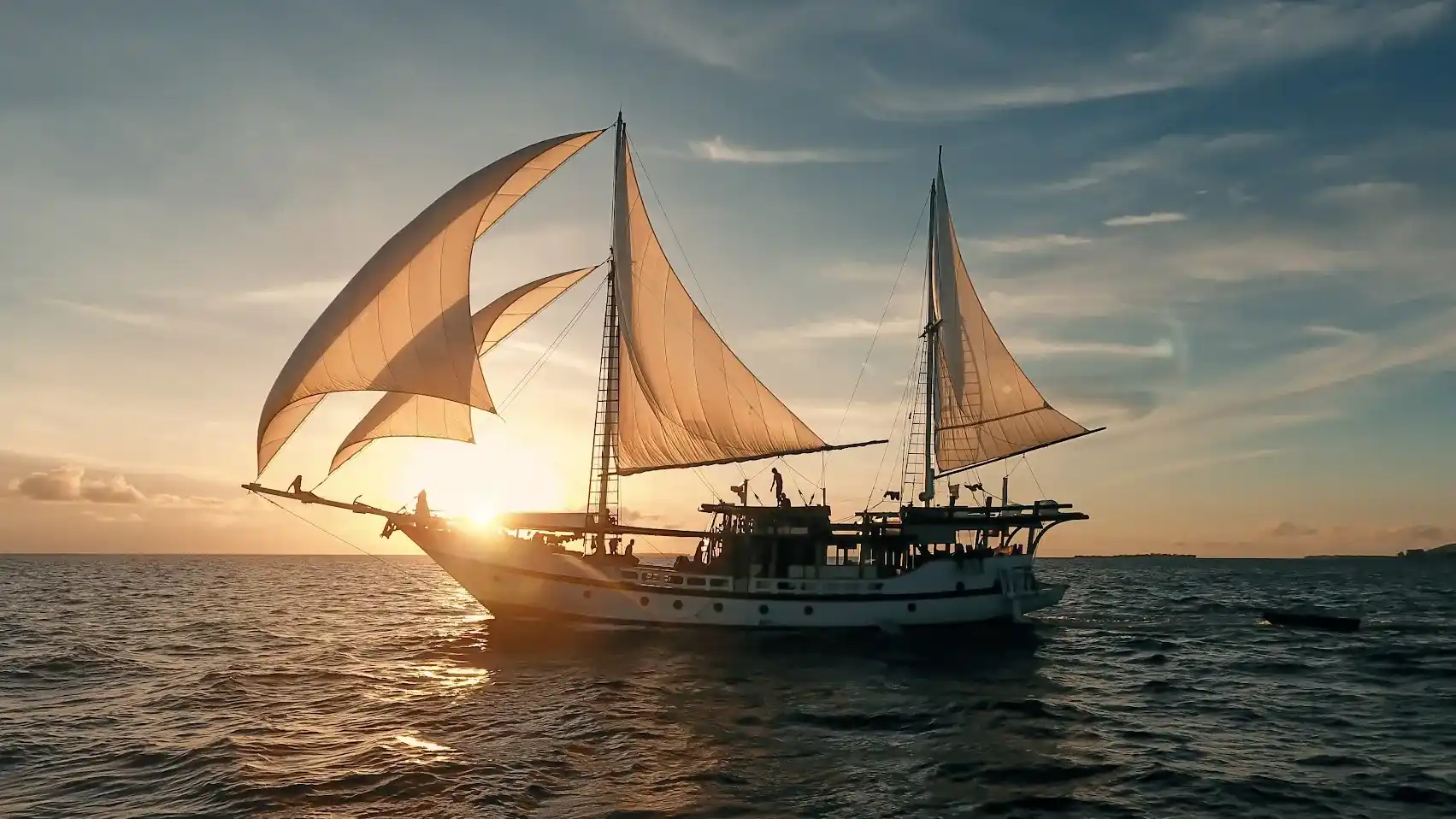
A phinisi liveaboard under way between the islands of Komodo National Park
1,063
Confirmed bookings in the dataset, Nov 2025 – Aug 2026
74 days
Median lead time between booking and sailing
91%
Had booked at least one month before departure
8x
Quieter in November than in August

In short

July and August are the busiest months in Komodo National Park and the first to sell out; September, October and November keep dry-season conditions with a fraction of the demand, and the booking year itself runs January to June — months ahead of the sailing season it is buying.

  • Of 1,063 bookings, 840 were made between January and June. Four in five.
  • April 2026 was the single busiest booking month — for June-to-August departures.
  • The median guest books 74 days out; 91% have booked at least a month out.
  • August 2026 park dates sold out before August began, under the annual visitor cap.
A phinisi yacht under full sail in Komodo National Park

The demand calendar

Who is on the water, and when

Six windows, described by how full they are rather than by how sunny. Sailing conditions are covered on the weather page.

December – January

The quietest booking months on our books, and the smartest time to start looking if you want full choice of vessel and cabin. Sailing over the festive fortnight itself is a different matter — that window fills with Australians and long-haul winter escapes.

February – April

The booking rush, not the sailing rush. Volume climbed from roughly 90 in December 2025 to about 174 in February, 365 in March and past 500 in April — almost none of it for those months. It is people buying June, July and August.

June

The season proper opens. Crowds building rather than peaked, and the last comfortable point at which a specific boat on specific dates is still a realistic ask.

July – August

Peak. Italian and French summer holidays fill the boats, half of August 2026 bookings arrived more than three months out, and the park itself sold out its August dates before the month started. If your dates are fixed here, treat March as your latest comfortable window.

September – October

Dry weather, a third less crowd. German guests own September; Dutch autumn holidays own mid-October. Both months sell steadily rather than frantically, so they reward planning without demanding a year of it.

November

The quietest sailing month in the park by a wide margin — roughly eight times fewer bookings than August. Calmest water of the year, real chance of an afternoon shower, and anchorages with nobody in them.

August or September?

Weather

September
Dry, calm, clear
August
Driest and clearest of the year

Crowd

September
About a third less
August
Peak, every site

Park access

September
Steady availability
August
Sold out ahead of the month in 2026

Choice of vessel

September
Wide at 2–3 months out
August
Narrow after March

Book by

September
2–4 months ahead
August
First quarter of the year

Best for

September
Almost everyone
August
Fixed school holidays

This compares two months of our own season, not two operators. If your dates are locked to a school holiday, August is not a choice and the answer is simply to book earlier.

How to read the booking curve

The median tells you the middle of the distribution. It does not tell you whether your trip is in it.

The median is 74 days — and it is misleading

The middle of the curve is made of flexible travellers on shoulder dates who can move a week either way. If you cannot move — a school holiday, an anniversary, a group of eight, flights already priced — that number does not describe you and 74 days will not be enough.

A boat cannot add a floor

A hotel sells another room on a busy weekend. A vessel, a cabin category and a set of dates form a combination that exists exactly once. That is why liveaboard availability behaves nothing like hotel availability, and why the curve steepens hard past the two-month mark.

You will not be on a national tour

The ledger spans 54 source markets, with the ten largest making up around 72% of bookings and European markets roughly 58%. A standard 3D2N departure regularly seats guests from three or four continents. Solo travellers run at a steady 7% all year.

Figures are the operator's own reservation and finance records for November 2025 to August 2026, n=1,063 — not a survey and not an industry estimate.

Frequently Asked Questions

How far ahead should I book?
Two to four months for shoulder dates. For July, August or the festive window, aim for the first quarter of the year — March is the latest comfortable point if your dates are fixed. For a specific vessel or cabin category in peak season, three to five months.
Is Komodo a last-minute destination?
No, despite a 74-day median. 91% of guests had booked at least a month out and 72% at least two months out. The gap between planning ahead and still available closes fast once you cross two months.
Which is the quietest month?
November, by a distance — around eight times fewer bookings than August. It carries the calmest water of the year and a genuine chance of afternoon rain, which is exactly why it stays quiet.
Can the park itself run out?
Yes. Park entry runs under an annual visitor cap and August 2026 dates sold out before August began. Boat availability and park availability are two separate constraints, and in peak season the park is the tighter one.
Who else will be on the boat?
On a shared departure, a genuinely international mix — the dataset spans 54 markets, led by Italy, the Netherlands, France, Germany, the UK, North America, Australia and Singapore. Expect three or four nationalities at dinner. On a charter, only your group.
Does booking early cost more?
No. Booking roughly a year ahead actually confirms on a 30% deposit rather than the standard 50%, with a further 20% at 120 days and the balance at 30 days. The full mechanics are on the booking page.


Ask before the curve closes

Send the window you have and the size of your group. We will tell you what is genuinely still open on those dates, what is close to gone, and whether moving a week gives you a better boat.